
From Southend-on-Sea to Broadway: What GoFundMe Taught Me About Fundraising

Eighteen months ago, I launched a GoFundMe campaign with an ambitious goal: to raise £150,000 to take musicians with learning disabilities to Broadway in honour of my friend, the late Sir David Amess.
Last week, we reached that target thanks to a massive team effort, including concerts, quiz nights, abseils, quilt-making and countless other fundraising activities, supported
by amazing donations from individuals, community groups and the corporate sector.
Looking back on the journey, I realise that successful fundraising is about far more than money. It's about storytelling, relationships, resilience and the extraordinary power of people coming together behind a shared dream.
Here are some of the lessons I learned along the way that will stay with me forever.
Start with a story that people can believe in
My biggest piece of advice is simple: create a narrative that people can believe in, then make it a story of hope.
Our campaign was never simply about paying for flights to New York. It combined the core Music Man Project values of aspiration, opportunity and inclusion, alongside the emotional legacy of Sir David Amess. People were not donating to a travel fund; they were investing in a vision of what the world could look like when people with learning disabilities are given the same opportunities as everyone else.
Fundraising campaigns succeed when people can picture the ending and genuinely want to help make it happen.
For us, Broadway represented far more than a destination. It became a symbol of possibility, not only for our performers, but for thousands of families who want society to see the potential of people with learning disabilities. I also believe it will inspire people everywhere to pursue their own ambitions, regardless of the obstacles in their path.
Reputation matters
One of the most important lessons I learnt is that successful fundraising does not begin on the day you launch your campaign. It begins years, sometimes decades, earlier.
I started teaching my first ever student with learning disabilities back in 1999. Over the years, I've built partnerships, developed credibility and earned the trust of our supporters. People invest in people and organisations that they believe will deliver on their promises.
If you want others to support your vision, you must first demonstrate your commitment to it.
Take time to build your reputation, strengthen your network and establish credibility within your sector. Trust is fundraising's most valuable currency.
Leave impostor syndrome behind
A long time ago, I realised that there is no room for impostor syndrome when you are trying to achieve something extraordinary. After all, if you don't do it, someone else will!
So be confident.
Be proud. Be determined. Most of all, be tenacious.
There were moments during our campaign when the responsibility felt overwhelming. Taking musicians with learning disabilities from the UK to Broadway had never been attempted before. The significance of the project - for the United Kingdom, for the disabled community and, most importantly, for Sir David's legacy, weighed heavily on my shoulders.
At times, the fundraising journey was deeply emotional. My ambition was not simply to organise a concert in New York; it was to prove that inclusion belongs on the world's biggest stages. Whenever doubt crept in, I reminded myself why we had started. If you truly believe in your mission, you have a responsibility to keep going.
Every donation matters
One of the greatest privileges of fundraising is witnessing the generosity of others.
I made a conscious effort to treat every donation exactly the same, whether it was £5 or £20,000. Every contribution represented something much more important than money. Every donation, every message of support and every social media share felt like someone saying:
"I believe in what you're doing."
That is incredibly energising.
Fundraising is ultimately about human connection. Gratitude matters. Thank every donor, celebrate every contribution and never forget that people are choosing to place their trust in you.
Say yes to everything
Fundraising is not a nine-to-five activity.
You need to work day and night and never allow a potential opportunity to pass you by. Answer every email. Return every phone call. Explore every avenue without fear.
My motto throughout the campaign became:
"They can only say no."
You have to be willing to face rejection, disappointment and setbacks in order to achieve something remarkable. Some conversations will lead nowhere, but others will change everything.
The key is to keep asking.
Find the perfect launch moment
Every campaign needs a moment that captures people's imagination.
For us, that moment came when The Music Man Project performed at Coutts Bank alongside our patron, Michael Ball. It was the perfect launch for our Broadway appeal. It brought glamour, excitement and credibility to our campaign, and suddenly people began to take notice.
A memorable launch creates momentum. It gives supporters something tangible to rally around and turns an idea into something real.

Develop strong relationships with the media
Fundraising is not just about raising money; it's also about raising awareness. Strong relationships with journalists, broadcasters and media organisations can transform a campaign, helping your story reach audiences far beyond your immediate network.
Thanks to our president, Dame Penny Mordaunt, we were able to announce that our Broadway dream was coming true live on Channel 4 television on Christmas Day. Twelve months on from the launch of our appeal with Michael Ball at Coutts Bank, the announcement re-energised the entire team and gave our campaign a huge boost at a crucial moment.
Christmas is always a particularly powerful time to attract media attention. People are naturally drawn to stories of hope, community and human achievement, and our performers' journey to Broadway resonated with audiences across the country.
We also received outstanding support from our local newspapers and regional television news programmes, whose coverage helped introduce our story to thousands of new supporters. Every interview, newspaper article and television appearance brought fresh momentum to the campaign.
Never underestimate the power of the media. A compelling story, shared at the right moment, can inspire people you may never otherwise have reached.

Surround yourself with people who believe in you
One of the hardest lessons I've learnt over the years is how to build a team and trust them. Although a small charity run by volunteers, our campaign relied on experts from across our network to support the vision. We benefited hugely from professional photography, videography, design, public relations and event management. The support of our president, patrons and partners elevated the credibility of our campaign to new heights.
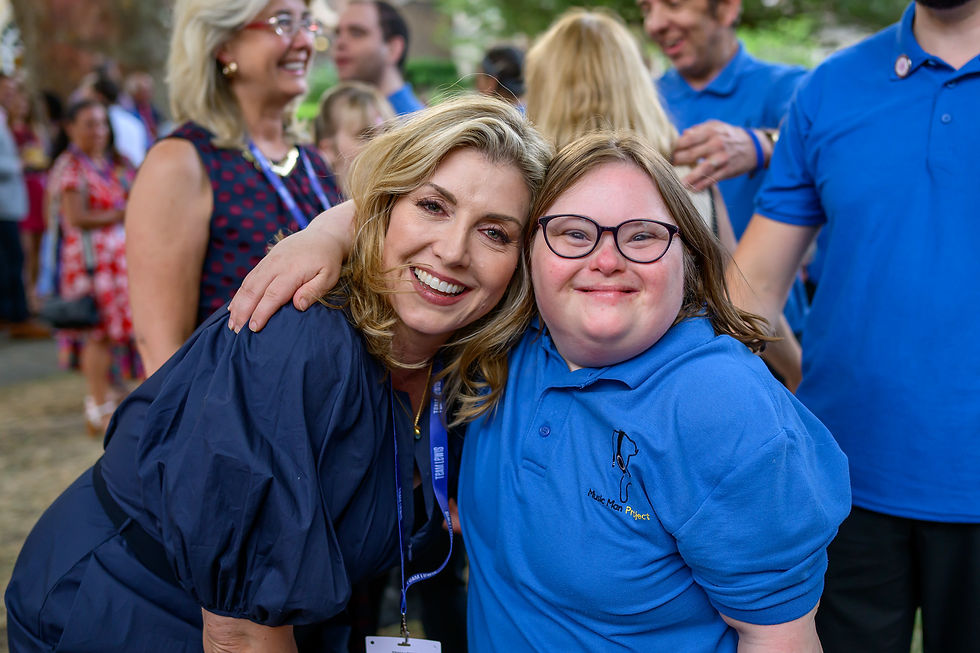
The fundraising target wasn't about me. It was about all of us.
The support we received from GoFundMe itself was genuinely game-changing. Their team attended fundraising events and were always available on Zoom, by email or in person whenever I needed advice or encouragement. I will always be grateful for the guidance they gave every step of the way.
This became particularly important during the difficult moments. There were times when the scale of the challenge felt enormous, and the encouragement of key supporters often arrived at exactly the right moment, giving me the energy to continue.
Fundraising can sometimes feel lonely. Having people around you who believe in your mission makes all the difference.
Keep your supporters informed
One of the most valuable pieces of advice GoFundMe gave me was to post regular updates.
Whenever I shared news about our progress, another donation would invariably follow. More importantly, updates allowed me to show donors exactly how their generosity was making a difference.
People do not simply want to give money; they want to feel part of the story.
Fundraising should never be a one-way conversation. Invite people into your journey. Share your successes, your setbacks and your milestones. Let supporters celebrate alongside you.

Don't underestimate offline donations
Although our campaign was hosted online, offline donations played a huge role in helping us reach our target.
Many organisations preferred to donate directly into our charity bank account, and the ability to add those contributions to our fundraising total was incredibly useful. Large donations arriving in chunks created momentum and helped drive the campaign forwards.
Flexibility matters. Make it as easy as possible for people to support your mission.
The power of the first domino
Securing the support of a major corporation or charitable foundation can transform a fundraising campaign overnight.
When a respected organisation backs your project, it sends a powerful message: this mission has been trusted, scrutinised and deemed worthy of support.
Large donations create what psychologists call social proof. People are far more likely to donate when they see that:
a major organisation already believes in the project;
the fundraising total is rising quickly; and
the campaign appears to be gathering momentum.
Suddenly, your fundraiser stops looking like a hopeful idea and starts to resemble a movement.
The benefits extend far beyond the donation itself. Corporations and foundations amplify your message, introduce your work to new audiences and attract media attention. They create opportunities that money alone cannot buy.
Once one organisation supports you, others feel more confident doing the same. It becomes easier to secure sponsors, strategic partnerships, press coverage and invaluable in-kind support.
It is the classic "first domino" effect.

Most importantly, enjoy it
Perhaps the biggest surprise of all is how much I enjoyed fundraising.
I love seeing people come together for a shared purpose. I love telling stories. I love communicating a vision and watching others embrace it.
Fundraising turned our mission into a movement. It allowed me to tell the stories of our students and invite more people into our world. Every milestone felt like a victory. Every donation validated the dream.
It is not really about the money.
It is about rallying people behind your performers, your values and your story. It is about watching hundreds, and then thousands, of people unite behind a common belief. It is about seeing the curtain rise on something bigger than yourself.
Standing here today, knowing that thousands of people have helped make our Broadway dream possible, I realise that fundraising is ultimately an act of optimism.
It is hope, transformed into action.
And perhaps that is the greatest lesson of all. Fundraising is not about asking people to give money.
It is about giving people something to believe in.


Comments